
What spalling is, exactly
Spalling is the gradual disintegration of the surface of brownstone — characterized by flaking, cracking, and eventual loss of pieces of the stone face. It can happen in patches the size of a coin, or in sheets the size of dinner plates. In severe cases, large sections of decorative ornament can shear off and fall.
Brownstone is a layered sandstone — geologically, a sedimentary rock made of fine sand grains held together by clay and iron oxide binders. The layered structure is part of why it failed — and part of why it is so beautiful when intact.
Spalling is the visible sign that the layers of the stone are separating. Once the process starts, it accelerates: each lost layer exposes the next one to weather and freeze damage.
The science: water and freeze cycles
The mechanism is simple and brutal. Water enters the brownstone — through micro-cracks, failed mortar joints, or simple absorption from rain on the surface. The water sits inside the stone in microscopic pores. When temperatures drop below freezing, that water expands by about 9% as it turns to ice. The ice exerts pressure on the surrounding stone — pressure that exceeds the cohesive strength of the layered binders.
Each freeze cycle creates microscopic damage. NYC has 25–35 freeze-thaw cycles per typical winter — multiply that by 100+ years, and the cumulative damage is enormous.
The damage is amplified by:
- Salt deposition from sidewalk salt and atmospheric salt. Salt crystals also expand on hydration cycles, doing similar damage.
- Failed mortar joints that channel water directly into the stone behind them.
- Roof or cornice failures that send water down the wall.
- Anything that traps moisture inside the wall — including the wrong kind of "waterproofing" coating.
The warning signs, in order
Brownstone deterioration typically progresses in this sequence:
Stage 1: Surface roughening. The stone's original sharp profile becomes slightly soft. Carved details lose definition. Hard to notice unless you look at old photos.
Stage 2: Hairline cracking. Fine cracks appear on the surface, often parallel to the stone's original layering. Visible up close.
Stage 3: Surface flaking. Coin-sized pieces start to lift off the surface. Easy to spot from the sidewalk.
Stage 4: Layer separation. Larger pieces — sometimes dinner-plate-sized — separate and fall. Common after winters with heavy freeze cycles.
Stage 5: Structural compromise. Decorative elements, sills, lintels, or carved features lose enough mass that they become structural concerns. Possible falling-debris risks.
Most homeowners call us between stages 3 and 4. Earlier intervention is dramatically cheaper. If you notice anything at stage 2, get a professional opinion — preventive work at that stage is significantly less expensive than restoration after stage 4.
The single most expensive mistake
Here is the mistake we see most often — and the one that does the most damage:
A homeowner sees their brownstone showing some surface deterioration. They want to "protect" the stone. A contractor (or a hardware-store employee) recommends a silicone-based or oil-based sealer that promises to "waterproof" the brownstone. They apply it.
For about 18 months, it looks great. Maybe even 3 years.
Then, dramatically and apparently suddenly, the brownstone face starts blowing off in large pieces. By the next winter, what was a Stage 2 problem has become a Stage 5 problem. The repair, which would have cost $25,000 done early, now costs $90,000 because the original stone is gone.
Why this happens: Silicone and oil-based sealers are vapor-impermeable. They block water from entering the stone from outside — but they also block water already inside the wall from escaping. NYC walls have moisture in them: from interior humidity, from groundwater wicking up, from atmospheric humidity entering through cracks the sealer cannot reach. That moisture freezes inside the wall, behind the sealed surface. Each freeze cycle pushes the surface outward — until it lifts off in sheets.
If your contractor recommends any silicone-based sealer or "lifetime" waterproofing product on historic brownstone, walk away. This is the single most damaging treatment available, and it is widely sold.
The right fix that actually lasts
The right approach to spalling brownstone is multi-step, addresses the underlying causes, and uses materials engineered for historic masonry.
Step 1: Stop the water entry. Identify and fix the source of water. Often the cornice, roof, or failed mortar joints — not the stone itself. The stone fails because of where the water is coming from.
Step 2: Patch the failed areas with vapor-permeable patching compound. Color-matched to the surrounding stone, applied in thin layers, allowing the wall to continue breathing. We use specific products engineered for brownstone restoration.
Step 3: Repoint failed mortar joints with lime-blend mortar. Soft enough to flex with the wall, hard enough to last decades, color-matched to the original.
Step 4: Apply a vapor-permeable coating. A breathable system that sheds rain at the surface while letting moisture inside the wall escape. This is the OPPOSITE of a silicone sealer — and is the right approach.
Step 5: Maintain on a 5-year cycle. Touch up small failures before they become large ones.
Done correctly, this approach lasts 25+ years and stops spalling cold. We have buildings restored 15+ years ago that still look as they did the day work was completed.
Prevention: what to do every five years
If your brownstone has been properly restored — or if it is in genuinely good original condition — here is the maintenance schedule that keeps it that way:
- Every spring: Walk around the building. Look for new cracks, flaking, or rust streaks. Take photos as a record.
- Every 2–3 years: Have a professional walkaround. Most contractors do this for free for previous clients.
- Every 5 years: Touch up any small failures, refresh the topcoat in any sun-exposed areas that have weathered.
- Every 25 years: Plan for a more comprehensive restoration cycle. This is the "next big project" you should be saving for.
- Roof and cornice: Inspect annually. These are where most facade water entry actually starts. A $3,000 roof flashing repair often prevents a $50,000 facade restoration.
Frequently asked questions
Can I patch spalling brownstone myself?
For very small areas — a coin-sized chip — possibly yes, with the right vapor-permeable patching compound. For anything larger or more visible, the difference between a good patch and a bad patch is significant, and bad patches age into bigger problems. Professional patching is more expensive but lasts dramatically longer.
What's the difference between spalling and just dirt?
Dirt washes off. Spalling does not. If you can scrape the surface with a fingernail and material comes off as flakes or grains, you are looking at spalling. If running a hand over the surface feels like sandpaper, that is "sugaring" — an early-stage form of spalling on softer brownstones.
Is spalling structurally dangerous?
Stage 1–2 spalling is mostly cosmetic. Stage 3–4 is increasingly visible but still mostly surface damage. Stage 5 — when decorative elements, sills, or lintels are losing structural mass — can pose falling-debris risks, especially in NYC with sidewalks below. If you see any of this, get it assessed quickly.
Will insurance cover spalling repair?
Almost never. Spalling is considered "wear and tear" by virtually every NYC homeowner's policy, regardless of cause. Insurance covers sudden events (a tree falls on the cornice) but not gradual deterioration. The cost is on you. Plan for it as a long-term maintenance expense.
See spalling on your facade?
The earlier we catch it, the cheaper the repair. Send us a photo — most spalling questions can be answered from a clear sidewalk-level photo. We will tell you what stage you are at and roughly what scope of work makes sense. Call Sajin at 631-464-8200.
More from the journal.
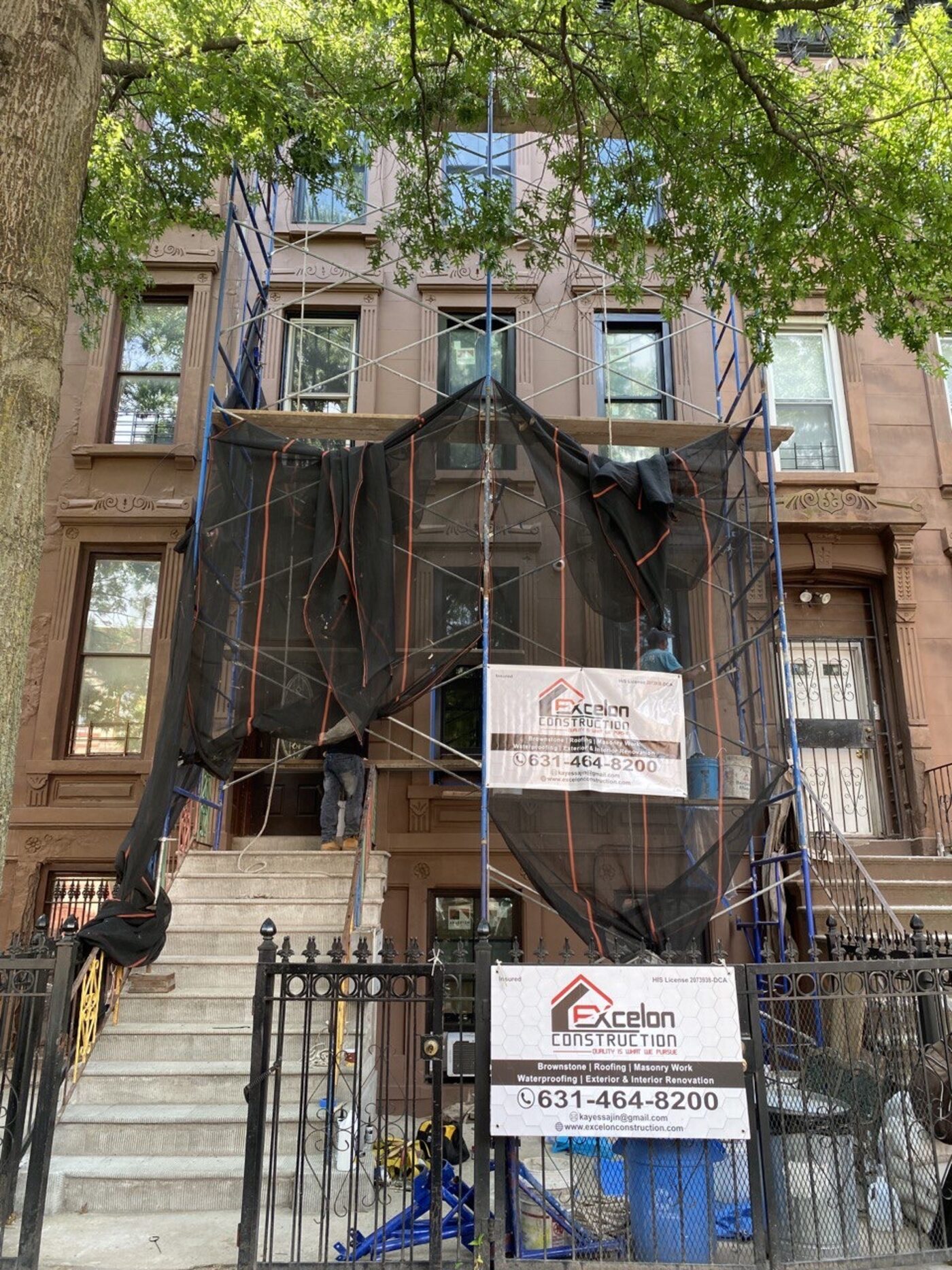
Brownstone Restoration Cost in NYC
What proper restoration actually costs.
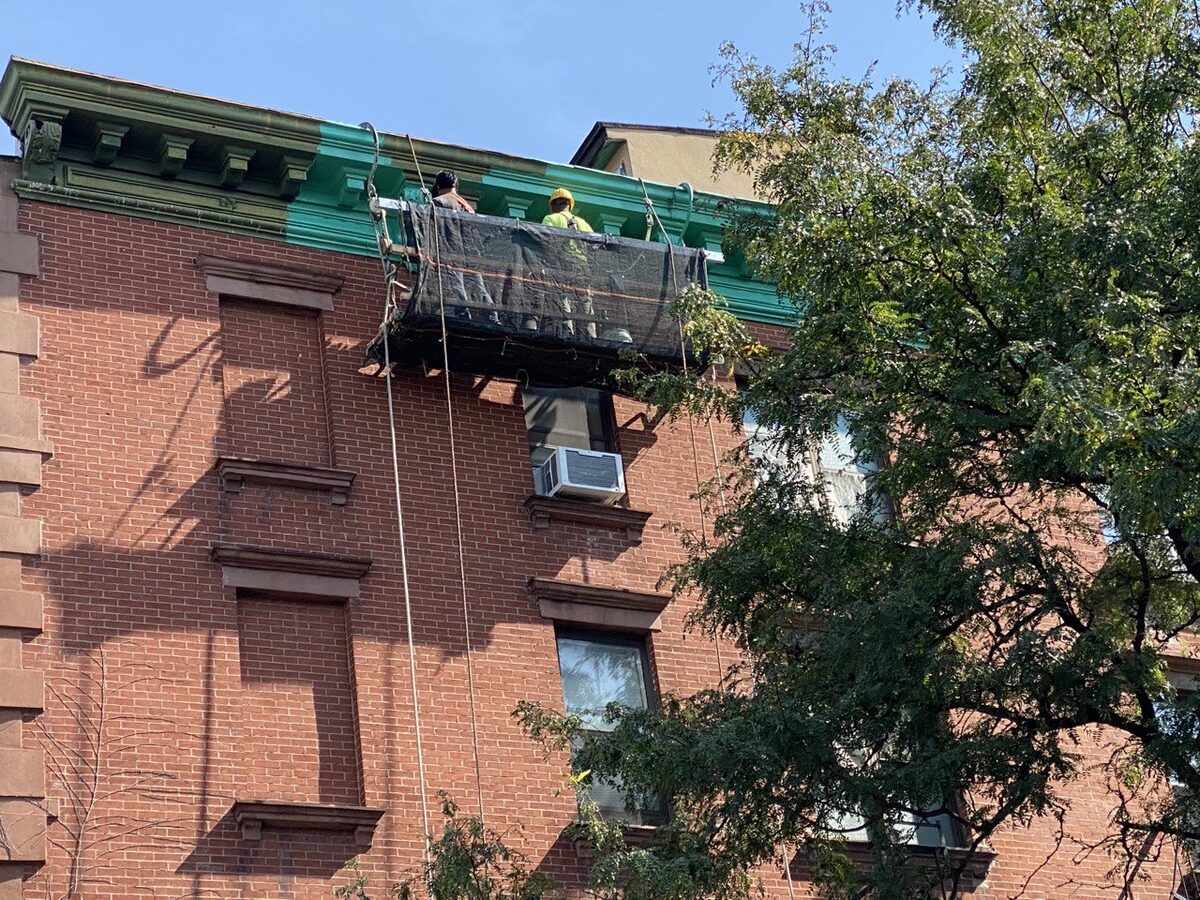
Cornice Repair Cost in NYC (2026)
Most brownstone water damage starts at the cornice.
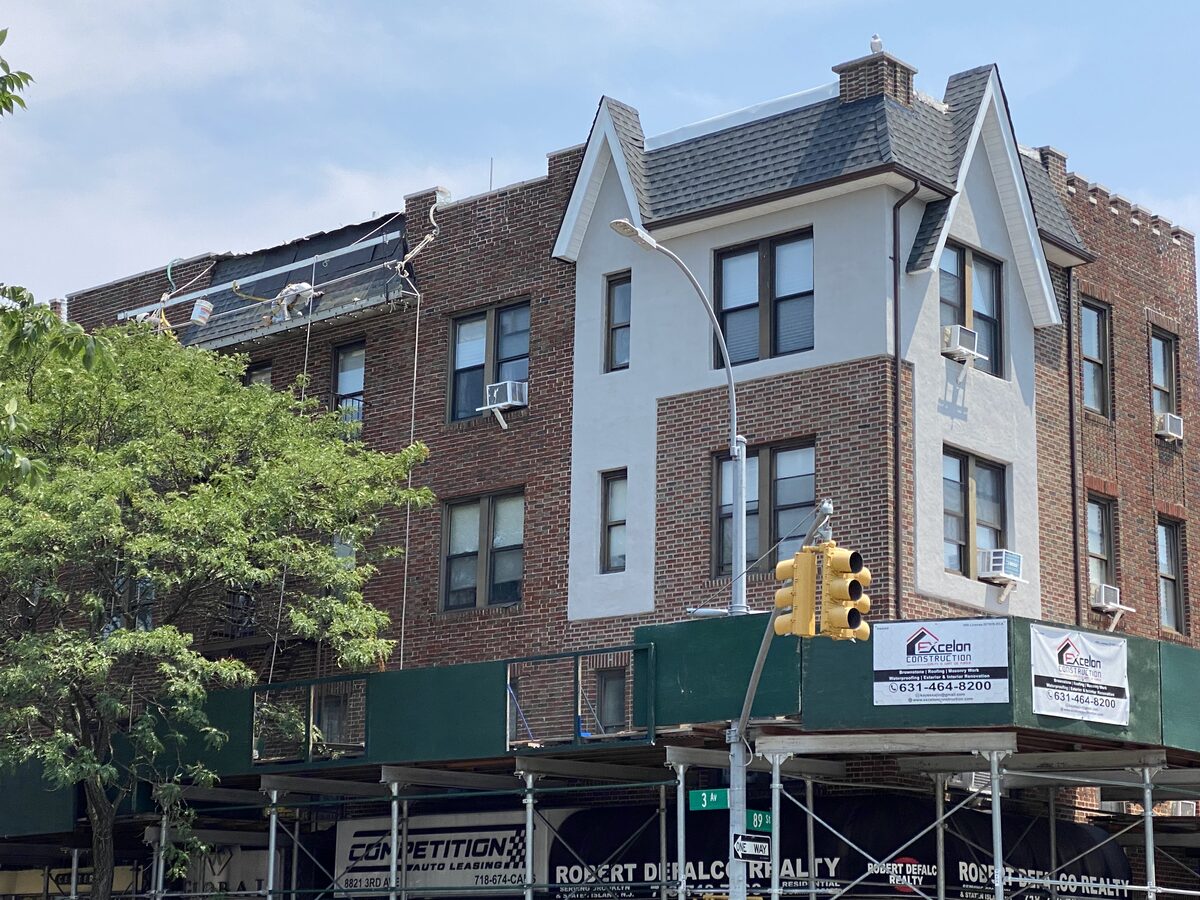
Brick Pointing vs. Tuckpointing
Mortar joint failure drives most brownstone spalling.