The full cost range
Brownstone restoration in NYC ranges from $8,000 to $200,000+, with most full-facade projects landing between $40,000 and $120,000. The range is wide because "brownstone restoration" covers everything from a cosmetic recoat to a full structural rebuild with stone replacement.
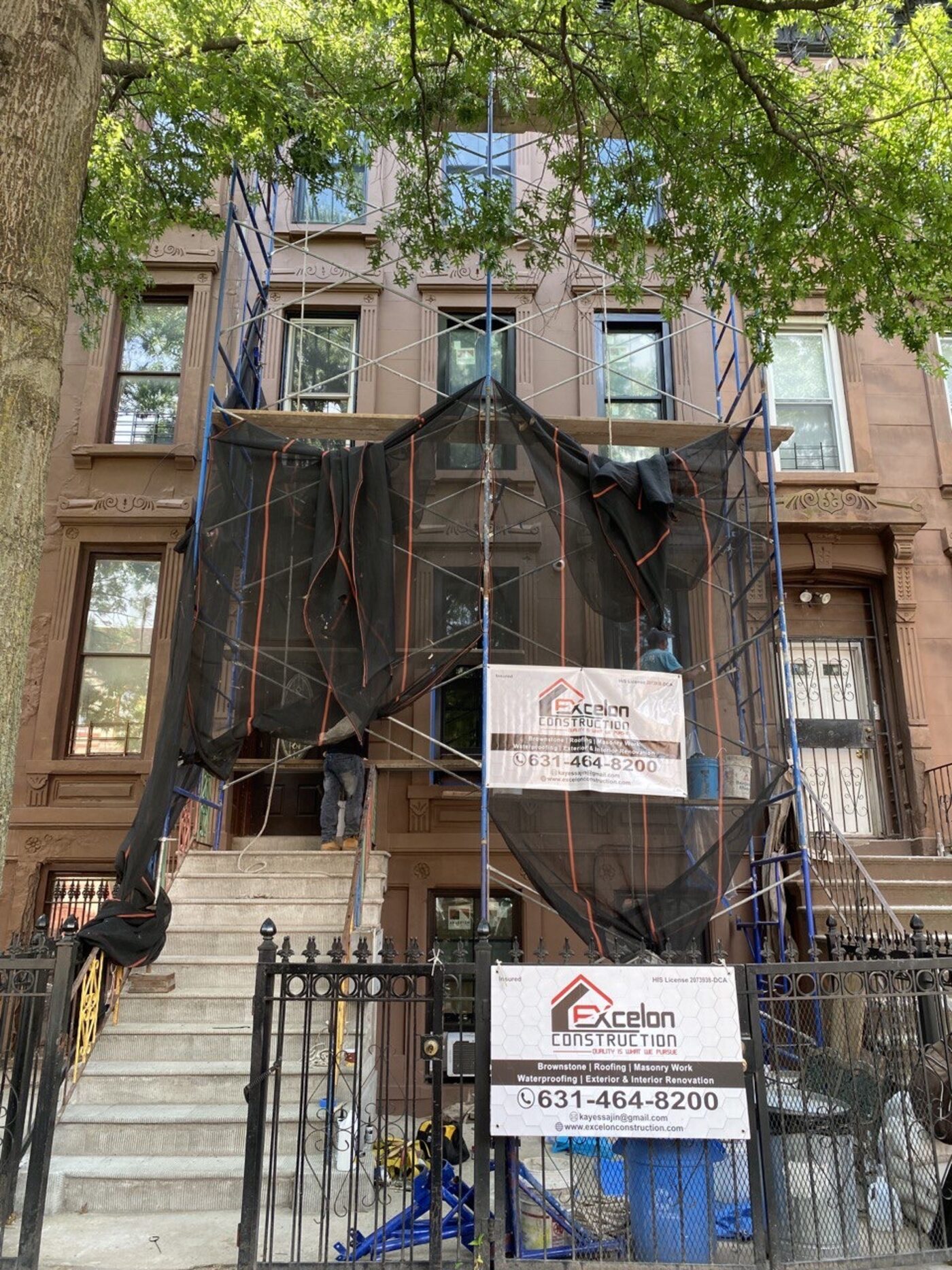
If you want one anchor number for a typical four-story Brooklyn brownstone in average condition: plan on $50,000–$80,000 for a complete facade restoration, including scaffolding, prep, patching, repointing where needed, color-matched recoat, and stoop work. Budgets significantly below that are usually limited-scope projects.
What "restoration" actually means
"Brownstone restoration" is a marketing term that contractors use loosely. It can mean any of the following — and one estimate at $30,000 vs another at $90,000 might be quoting completely different scopes:
- Surface coating only: Strip the old coating, recoat in matching color. No underlying repair. Appropriate for buildings in genuinely good condition.
- Selective patch and recoat: Address visible spalling spots, patch them, and unify with a recoat. Most common scope.
- Comprehensive facade restoration: Full strip, address all underlying issues (spalling, joint failure, water entry), comprehensive repair, color-matched recoat, stoop work, ironwork prep.
- Stone replacement restoration: Where the brownstone has failed structurally, sections are replaced with new dimensioned stone, recarved decorative elements, and full restoration around the replacements.
- Landmark restoration: Full restoration with LPC review, approved materials, and documentation requirements.
When comparing bids, the first thing to verify is which of these you are actually getting quoted for.
Scope tiers with real numbers
Here are typical NYC ranges for each scope, based on a four-story Brooklyn brownstone with a standard high stoop. Manhattan and larger buildings run higher.
Cosmetic recoat — $8,000–$18,000
Surface refresh on a sound facade. Strip failed coating, recoat with vapor-permeable color-matched system. Includes scaffolding. Appropriate when the underlying brownstone is in good condition and you mainly need a cosmetic refresh. Lasts 12–18 years if water entry is controlled.
Selective patch and recoat — $20,000–$45,000
Most common scope. Scaffolding, strip, identify and patch spalling spots, address mortar joint failure, comprehensive recoat. Stoop work optional add-on. Lasts 18–25 years.
Comprehensive facade restoration — $50,000–$120,000
Full scope. Includes everything in selective + extensive patching, repointing significant portions of the wall, full stoop restoration, ironwork preparation, full color-matched recoat. Plus cornice work if needed. Lasts 25+ years.
Stone replacement restoration — $80,000–$180,000
For buildings where significant brownstone has failed structurally — large sections need to be replaced with new dimensioned stone, recarved decorative elements, etc. Specialty stone-cutting work involved.
Landmark restoration — $80,000–$200,000+
Full historic district scope with LPC review, approved-material specs, full documentation. Premium materials and finish. Required for buildings in NYC historic districts.
What drives cost up
Beyond the basic scope tier, several factors push individual projects above the typical range:
Stoop condition. A stoop in Tier 2 condition (moderate wear) adds $10,000–$20,000. A stoop needing reconstruction adds $25,000–$45,000+.
Failed prior coatings. Buildings with multiple layers of old failed paint, sealers, or stone-look coatings need extensive removal before restoration can begin. Add 15–25%.
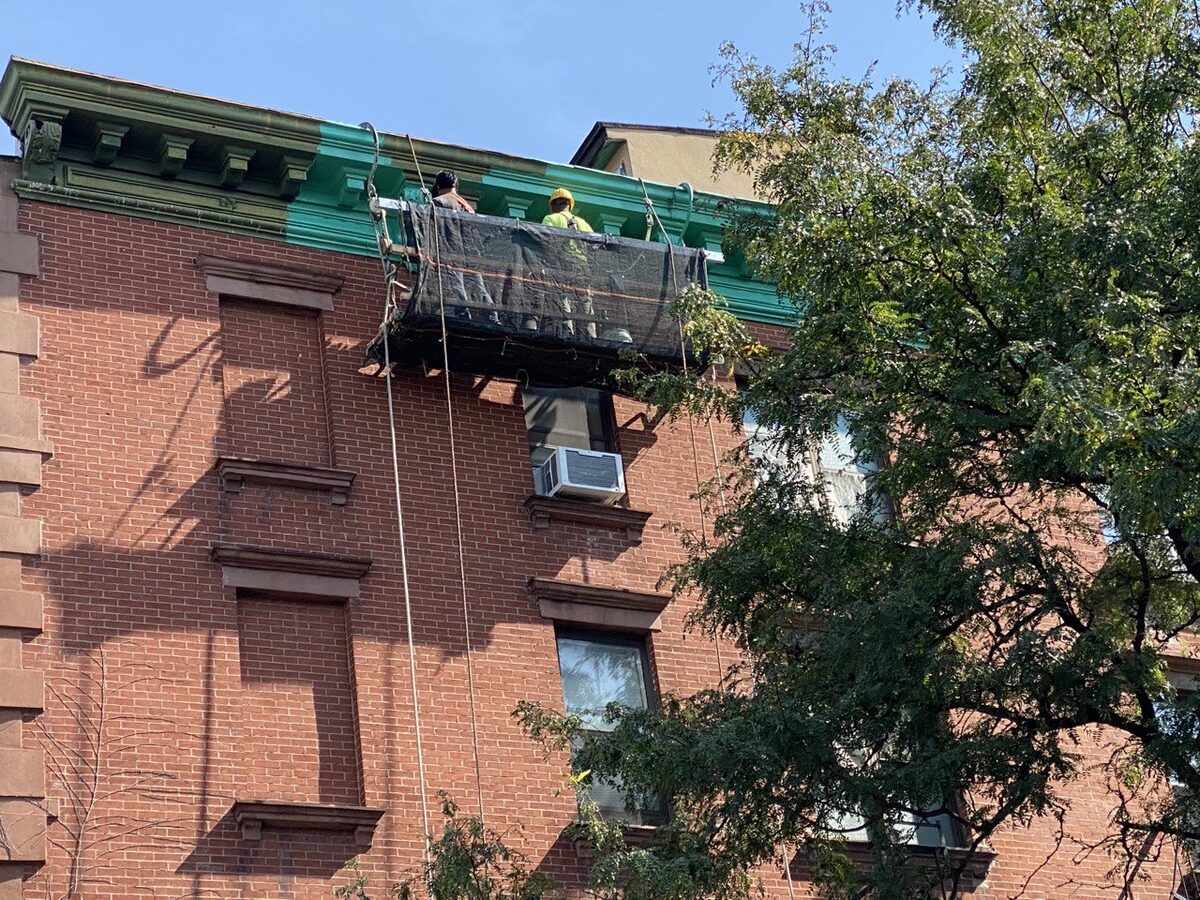
Cornice work. If the cornice also needs work, expect to add $12,000–$50,000 depending on tier (see our cornice cost guide for detail).
Repointing scope. If most of the mortar joints have failed, full repointing of the facade can add $20,000–$60,000 to a restoration project.
Landmark/LPC. Add 15–30% over equivalent non-landmark scope.
Building height. A 5- or 6-story building rather than 4-story adds 25–40% in scaffolding and labor.
Cheap repairs that destroy value
The most expensive thing you can do to a brownstone is a cheap repair. Here are the specific failure modes we see — and have to remediate at our own clients' expense after the fact:
1. Silicone-based "lifetime" sealers on brownstone. Almost universally catastrophic on historic brownstone. The sealer blocks moisture from escaping the wall, and freeze cycles blow the surface off from the inside. We see this every month. Repair runs $50,000–$150,000+ and is usually permanent damage to the original stone.
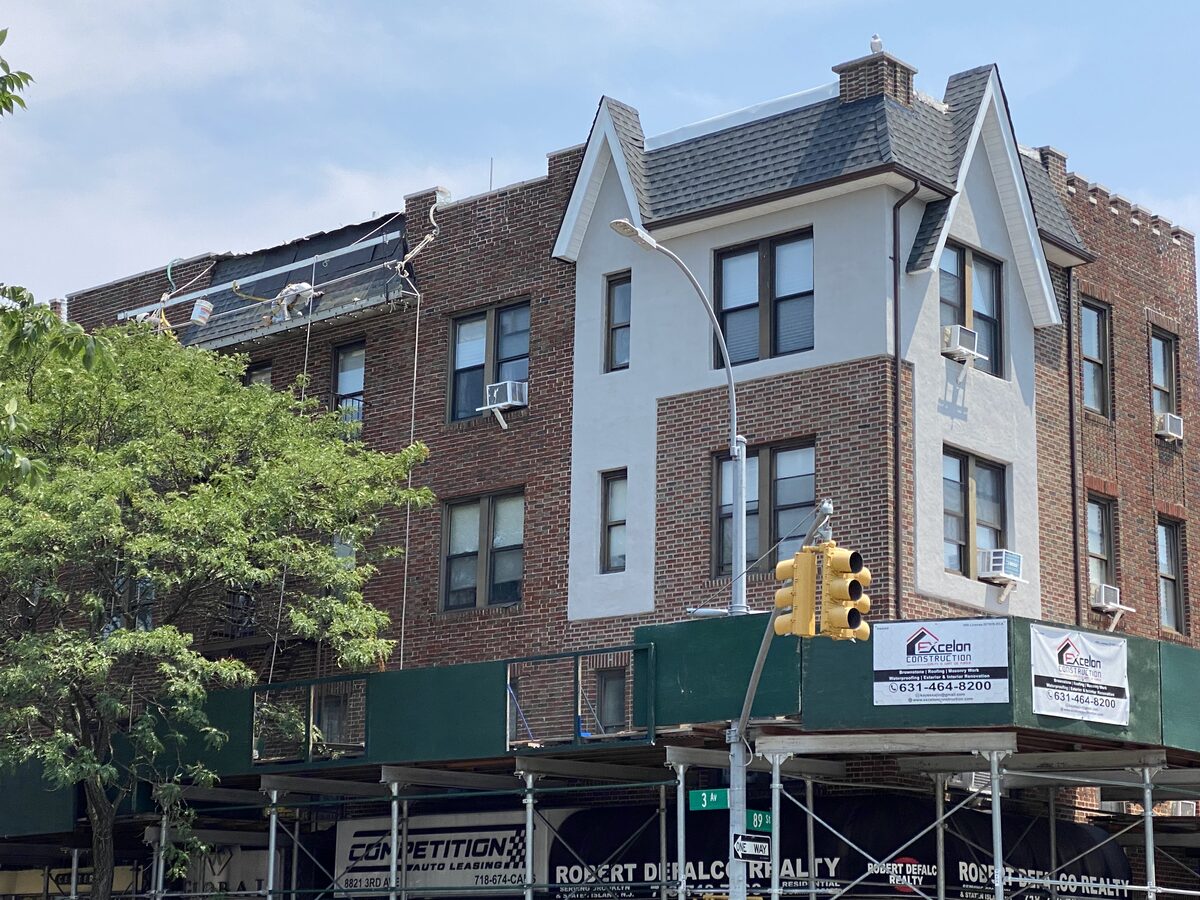
2. Hard mortar repointing. Portland-cement-only mortar packed into joints between soft historic brick destroys the brick face within 5–10 years. The "repair" actively damages the building.
3. "Stone-look" coatings. Many homes from the 1980s and 90s were "restored" with thick textured coatings designed to mimic brownstone surface. These have all aged badly. Removal is now part of any modern restoration.
4. Caulk-only stoop repair. Filling tread cracks with caulk and painting over them. Looks fine for 1–2 years, then the underlying issues come back, plus now you have caulk in the cracks that has to be removed.
5. Painted-over cornice rust. See our cornice cost guide. Still common.
The math of doing it right
NYC brownstones in well-restored condition sell for noticeably more than equivalent buildings in deferred-maintenance condition. Real estate agents in Park Slope, Brooklyn Heights, the Upper East Side, and Cobble Hill will tell you the same thing — buyers see facade condition as a proxy for general building maintenance, and they pay accordingly.
A properly restored brownstone facade typically returns 70–90% of its cost in increased home value at sale, plus avoids the ongoing maintenance costs of a building that needs intervention every 5 years instead of every 25.
The math, simplified:
- $60,000 proper restoration that lasts 25 years = $2,400/year amortized maintenance cost.
- $15,000 cosmetic repair that fails in 5 years = $3,000/year amortized cost. And you still need to do the proper restoration eventually, on a more damaged building.
Doing it right is cheaper in the long run, in almost every case.
Frequently asked questions
How do I know which scope tier my building actually needs?
A walkaround with an experienced contractor is the fastest way. From the sidewalk and a brief inspection, most experienced eyes can tell within 15 minutes which tier a building falls in. We do this for free for any Brooklyn or Manhattan property.
Can the work be done in stages?
Yes — and sometimes that is the right approach (especially if the budget is tight in one year). The trade-off is that scaffolding goes up and comes down for each stage, which adds 15–25% to total cost compared to doing all the work in one project. We can help you think through the math.
How long does brownstone restoration take?
A comprehensive Tier 3 facade restoration on a typical four-story brownstone runs 6–10 weeks on site. Tier 1 cosmetic work takes 2–3 weeks. Landmark projects with LPC application time take 4–6 months from initial call to project start.
What time of year is best for brownstone work?
Most brownstone restoration happens between April and November because patching compounds, mortar, and coatings need temperatures consistently above 40–50°F to cure properly. Scheduling for spring or summer typically requires booking 2–4 months ahead.
Want a real number for your building?
A free walkaround takes 30–60 minutes. We will tell you which tier your facade is in, roughly what each tier of work would cost on your specific building, and which scope makes sense given your goals. No obligation. Call Sajin at 631-464-8200.
More from the journal.
Cornice Repair Cost in NYC (2026)
The other big NYC restoration cost question.
Why Your Brownstone Is Spalling
Understanding the diagnosis before the price tag.
Brick Pointing vs. Tuckpointing
What's the difference, and what does your building need?