
What stucco is, exactly
Stucco is a cement-based plaster, applied wet over a substrate (brick, concrete block, sometimes wood with appropriate prep), and finished while still pliable to a smooth, textured, or sand-finish surface. It can be left raw, painted, or — most commonly in NYC today — finished with a vapor-permeable acrylic system like Thorocoat.
NYC stucco comes in two broad families:
- Traditional Portland-cement stucco — three-coat or two-coat, applied over masonry or expanded metal lath. The classic NYC system, found on most older stucco buildings.
- EIFS (Exterior Insulation Finish System) — a synthetic system over rigid insulation, common on newer construction. We do not work on EIFS; if you have an EIFS facade, we will refer you to a specialist.
We work in traditional Portland and lime-Portland stucco systems, which is what most older Brooklyn and Manhattan buildings actually have.
Why stucco fails
Stucco fails for one of three reasons, in roughly this order of frequency:
- Bad prep on the substrate. Stucco is a topcoat. If the wall behind it is loose, dirty, smooth, or wet at the time of application, the stucco will not bond properly. Most stucco failures we see — entire sheets popping off the wall — are bond failures from inadequate prep.
- Wrong mix for the substrate. Stucco that is too hard for the underlying brick or block creates the same problem as hard mortar on soft brick: thermal movement cracks the bond.
- Trapped moisture. Painted with the wrong (non-permeable) coating, or installed without proper drainage at the base, stucco traps water that freezes and blows the surface off.
Properly applied stucco lasts 20–30 years. Improperly applied stucco lasts 3–7. The same homeowner often pays for two cycles of bad stucco before someone tells them what is actually wrong.
Our stucco process
1. Substrate assessment
We open up failed areas to see what is underneath. We check for old failed stucco (often hidden under the visible top coat), unsuitable substrate, water entry from above, drainage issues at the base.
2. Removal where needed
Loose or compromised stucco is removed. Sometimes this means a small patch; sometimes it means the entire wall.
3. Substrate prep
Wall cleaned, dampened (so it does not pull moisture out of the new stucco too fast), and any necessary lath or bonding agents installed.
4. Scratch coat
First coat goes on, "scratched" with horizontal lines so the next coat keys into it. This sets up the bond between layers.
5. Brown coat
Second coat builds thickness and brings the wall to a uniform plane. Allowed to cure properly before the finish coat — typically 24–72 hours minimum.
6. Finish coat and texture
Final coat applied and finished to spec — smooth, sand, dash, or textured. This is also where color (if integral) is added.
7. Cure and seal/coat
Stucco needs to cure for 28+ days before any topcoat or paint. Most NYC projects then receive a vapor-permeable Thorocoat for color and long-term protection.
What stucco costs
Stucco pricing depends heavily on whether you are repairing existing stucco, replacing it, or installing fresh on a previously un-stuccoed substrate.
Stucco patch & recoat
$3K – $10K
Spot repairs on otherwise sound stucco, plus a unified topcoat.
Stucco facade refresh
$10K – $25K
Power wash, repair, recoat with Thorocoat — most common.
Full stucco replacement
$20K – $50K
Old stucco removed, new three-coat system installed.
Stucco + waterproofing system
$15K – $60K
Combined scope — new stucco, custom color, full Thorocoat.
Recent projects
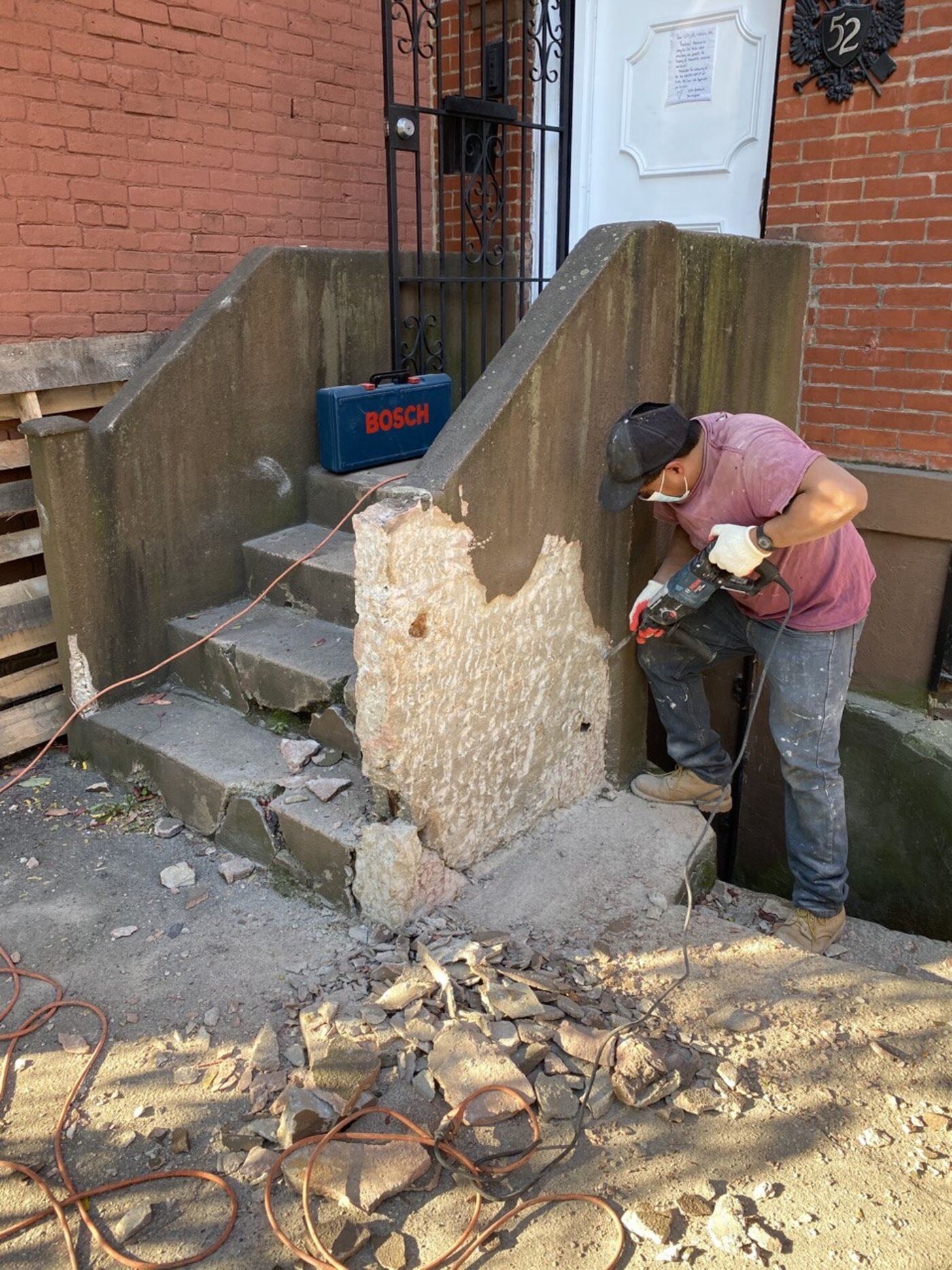
95 Clinton Avenue
Stucco & thorocoat
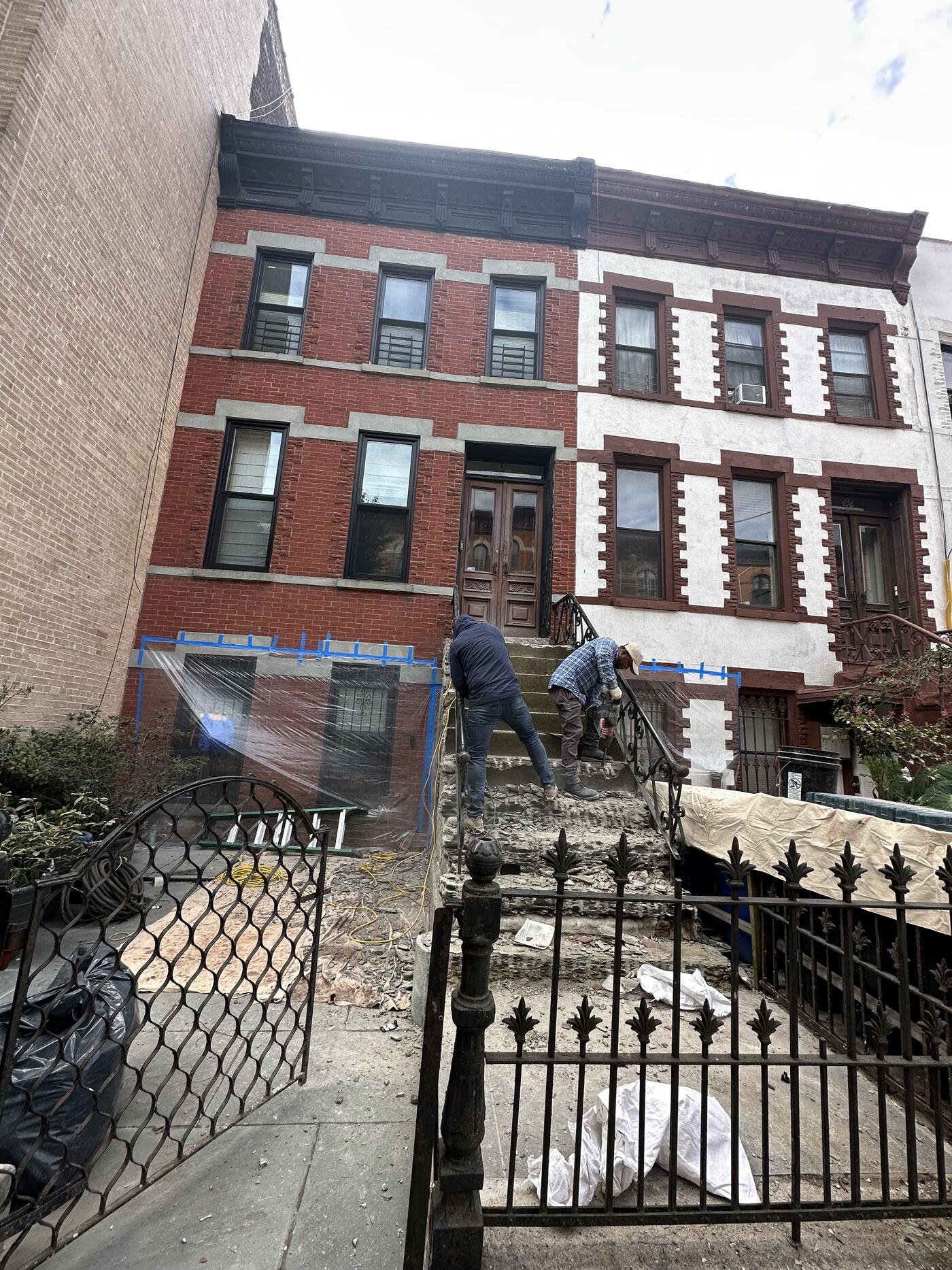
6424 11th Avenue
Stucco, thorocoat, waterproofing
Frequently asked questions
Can stucco be applied directly over brick?
Yes — over sound, properly prepped brick, with appropriate bonding agents and the right mix. Many NYC stucco facades sit on a brick or block backup. The key is making sure the brick is sound first; stuccoing over deteriorated brick just hides the problem until the stucco itself fails.
Why is my stucco cracking?
The most common causes: thermal movement of the building (expected — small hairline cracks happen), inadequate substrate prep (significant cracks), water entering behind the stucco (cracks plus blistering), and impact damage. Hairline cracks under 1/16" can be coated over. Larger cracks need to be repaired before any topcoat.
Should I paint my stucco or just leave it?
Most NYC stucco buildings benefit from a vapor-permeable acrylic topcoat (Thorocoat or equivalent) for color and long-term water management. Bare stucco weathers unevenly and absorbs more water. We rarely leave stucco uncoated.