Park Slope housing stock
Park Slope's housing stock is dominated by brownstone and brick row houses built between roughly 1880 and 1910, during the neighborhood's development boom following the opening of nearby Prospect Park. Most are three or four stories over a basement, with the iconic Brooklyn high stoop, decorative cornice, and bay or oriel windows.
The brownstone here is mostly the layered Portland sandstone characteristic of NYC — the same vulnerable material that requires careful, patient restoration. Many homes also feature limestone trim, cast-iron details, and original wood cornices that have been maintained, replaced, or covered over the past 140 years.
South Park Slope (south of about 9th Street) has more brick row houses and slightly later construction, while north and central Park Slope hold the most architecturally significant brownstones, especially along the cross streets near Prospect Park West.
Common deterioration patterns in Park Slope
Park Slope brownstones share a few common failure patterns we see repeatedly:
- Cornice rust — most galvanized sheet-metal cornices in Park Slope are 100+ years old and well past due for serious intervention. The classic warning sign is a brown rust streak running down the facade.
- Stoop riser failure — Park Slope stoops take heavy daily wear. Most original brownstone stoops here have had at least one prior repair, often poorly done.
- Spalling at the lower facade from sidewalk-level salt exposure, especially on north-facing walls that thaw slowly.
- Old "stone-look" coatings applied in the 1980s and 90s that have aged badly and now need to be stripped before any proper restoration can begin.
Landmark & LPC status
The Park Slope Historic District covers most of the neighborhood's prime brownstone blocks, and was significantly extended in 2012. If your building is between roughly Flatbush Avenue and Prospect Park West, you are very likely in the historic district. Almost all visible exterior work — cornice, stoop, color changes, repointing with non-matching mortar — requires LPC review.
We have completed multiple LPC-approved projects in the district. We coordinate the application process, specify approved materials, and execute work to the standard LPC inspectors expect.
Excelon projects in Park Slope
Below are recent Excelon projects in Park Slope. Each is a real address; we are happy to walk you to any of them in person.
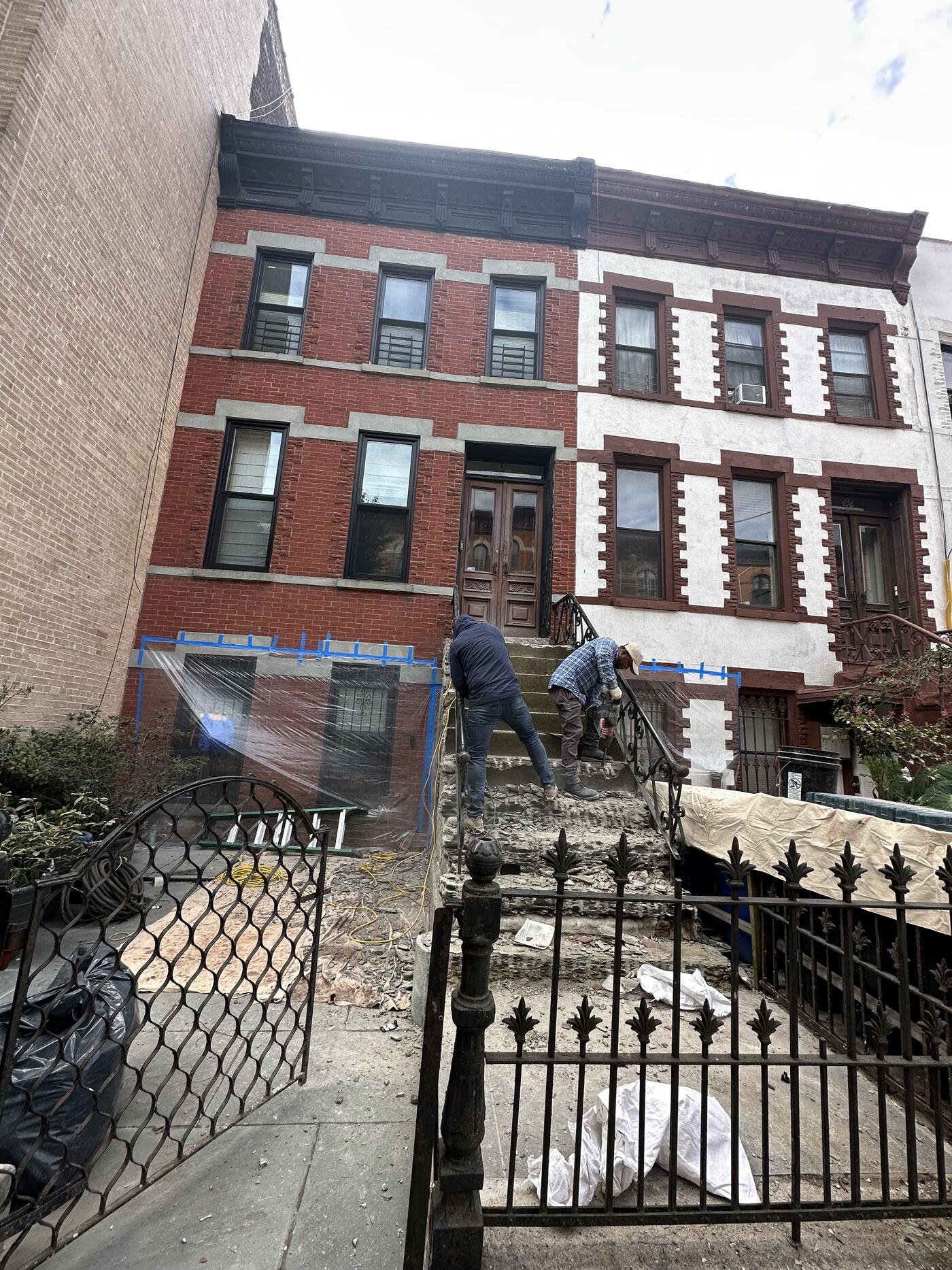
438 15th Street
Full brownstone restoration — facade, stoop, ironwork prep
266 5th Avenue
Brownstone restoration
358 1st Street
Brownstone restoration
385 14th Street
Brownstone restoration
How to start
The fastest way is a phone call to Sajin at 631-464-8200. We will set up a time to come to Park Slope and look at your building. The walkaround is free, takes 30–60 minutes, and there is no obligation to move forward.
If you prefer to send photos and details first, use the contact form. We typically respond within one business day.