
What a cornice actually does
Walk down any street in Park Slope, Bedford-Stuyvesant, or the Upper East Side and look up. The horizontal projecting feature at the top of every brownstone, just below the roofline, is the cornice. It is the most ornamental, the most architecturally defining, and — quietly — the most important water-management feature on the entire facade.
A cornice does three jobs at once. First, it throws water away from the building — the projection physically directs rain past the wall instead of letting it run down the facade. Second, it visually completes the building, providing the crown that ties together the whole composition the original architect designed. Third, it protects the soft brownstone or limestone immediately below it, which would otherwise erode dramatically faster.
When a cornice fails, all three jobs fail simultaneously. Water runs down the facade. The visual silhouette becomes wrong. And the stone below begins to spall in ways it never would have if the cornice were doing its job.
How cornices fail
Most NYC cornices are one of three types: galvanized sheet metal (the most common, especially on Brooklyn brownstones from 1880–1920), wood with sheet-metal cladding (older brownstones), or cast stone or terra cotta (higher-end Manhattan buildings). Each fails differently.
Sheet-metal cornices fail by rust. Water pools where the metal meets the wall, the galvanizing wears off, the underlying steel begins to oxidize, and eventually whole sections separate, sag, or lose their bracket support. The classic warning sign is a brown rust stain running down the facade below the cornice — by the time you see that, the cornice is years into its failure cycle.
Wood cornices fail from below. The wood substrate rots silently behind its metal cladding. Carpenter ants and termites move in. The decorative shapes — modillions, brackets, dentils — soften, shift, and eventually break loose.
Either way, every untreated NYC cornice will need significant intervention every 25 to 40 years. Buildings that have already had one bad repair will need it sooner.
Our cornice repair process
Every Excelon cornice job follows the same six steps. None are skipped, even when the homeowner only asks for a quick fix.
1. Inspection from above and below
We climb to the cornice level, tap-test for hidden rust or rot, photograph everything, and measure the actual extent of failure. The visible failure is almost always less than the actual failure.
2. Selective scraping and removal
We remove all loose paint, rust, and failed prior repairs back to sound substrate. We do not paint over. We do not skim coat over rotten wood. The first principle of cornice work is exposing the truth before you cover anything up.
3. Wood repair or sheet metal patching
Rotten wood is replaced with rot-resistant material. Rusted sheet metal is patched, soldered, or replaced section-by-section with matching profile. Decorative elements — brackets, modillions, dentils — that are too far gone are recreated to match.
4. Rust treatment and primer
All exposed metal is treated with a rust converter, then primed with a high-build, corrosion-resistant primer. This is the step that determines whether the work lasts five years or thirty.
5. Caulking and seam sealing
Every joint, seam, and meeting point with the wall below is caulked with an elastomeric, weather-rated sealant. This is where water tries to enter; this is where most cheap repairs fail in their second winter.
6. Color-matched finish coat
Two coats of high-grade exterior masonry/metal paint, custom-tinted to match either the historic color of the building or whatever the homeowner has chosen. We do not use whatever paint the supply house had on sale.
Materials & methods
The difference between a cornice repair that lasts thirty years and one that fails in five is almost entirely in the materials. Here is what we use, and what we will not.
- Rust converter, not just primer: on any exposed steel, we use a converter (typically phosphoric or tannic acid based) that chemically transforms surface rust into a stable, paintable layer.
- High-build epoxy primer: for severe corrosion or major patches, we use a two-part epoxy primer that bonds to treated metal far better than acrylic primers.
- Solder, not just caulk, on metal joints: where two pieces of sheet metal meet, the historically correct repair is a soldered seam. We still do this.
- Elastomeric sealants rated for direct UV exposure: not interior caulk, not "all-purpose" silicone. The wrong sealant fails in 18 months.
- Color matched on-site: we tint paint to match the existing facade color, not to a stock color from a fan deck.
What we will not do: paint over rotten wood, paint over un-treated rust, use household-grade caulk on exterior joints, use cheap one-coat masonry paint that chalks within a year.
What cornice repair costs
Most NYC cornice projects fall in one of three scope tiers. These are based on Excelon estimates over the past several years for typical brownstones, row houses, and small co-op buildings in Brooklyn and Manhattan.
Cornice paint & touch-up
$3K – $9K
Light maintenance — scrape, prime, paint. Cosmetic only, no structural repair.
Standard cornice repair
$8K – $25K
Typical four-story brownstone — selective patching, rust treatment, full repaint.
Major cornice restoration
$20K – $50K
Significant rust, missing pieces, decorative element recreation, full strip-and-restore.
Landmark / LPC cornice
$25K – $75K+
Historic district work with LPC review, approved materials, potential terra cotta or cast stone.
Recent projects
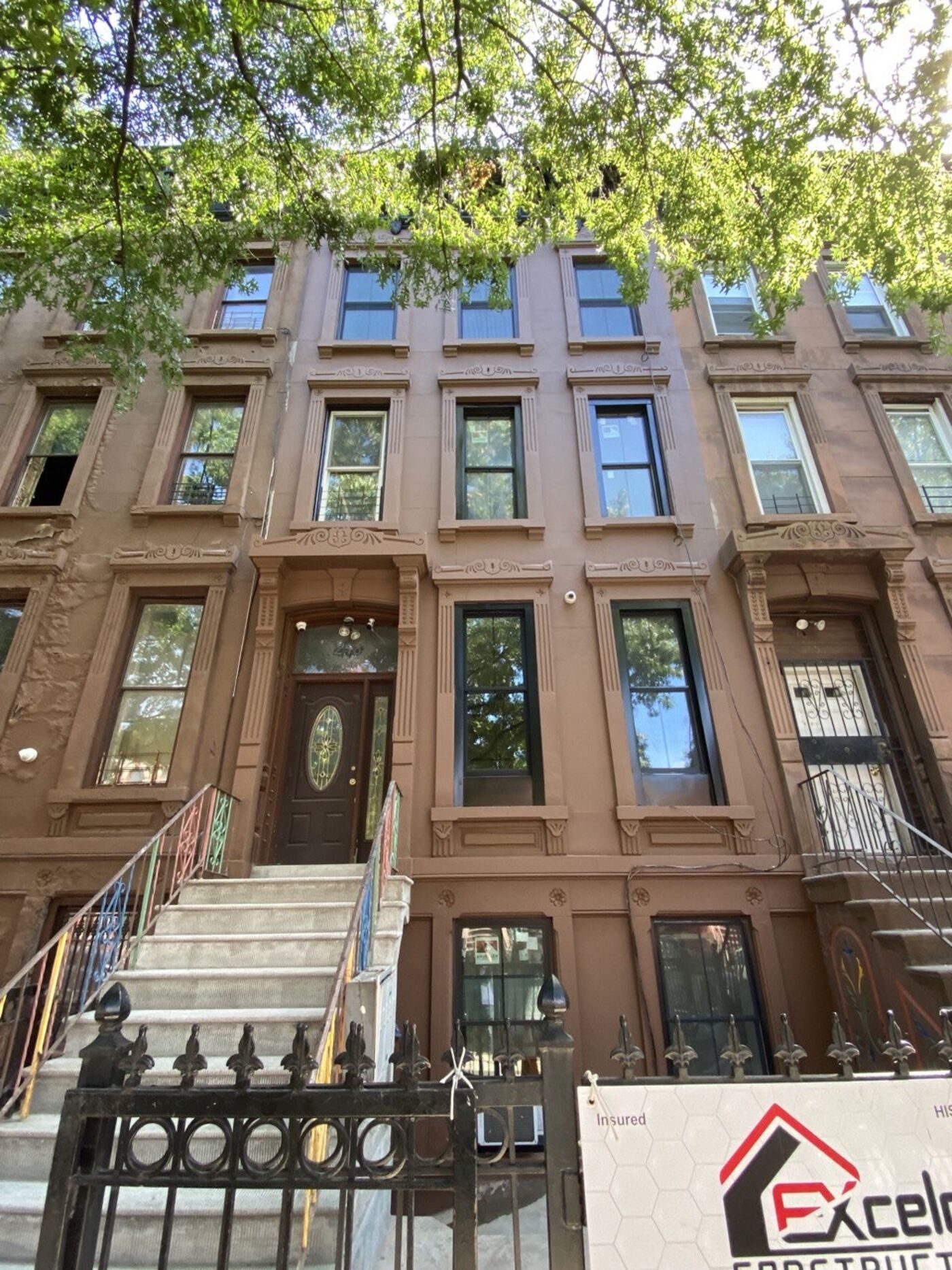
865 Lafayette Avenue
Cornice restoration
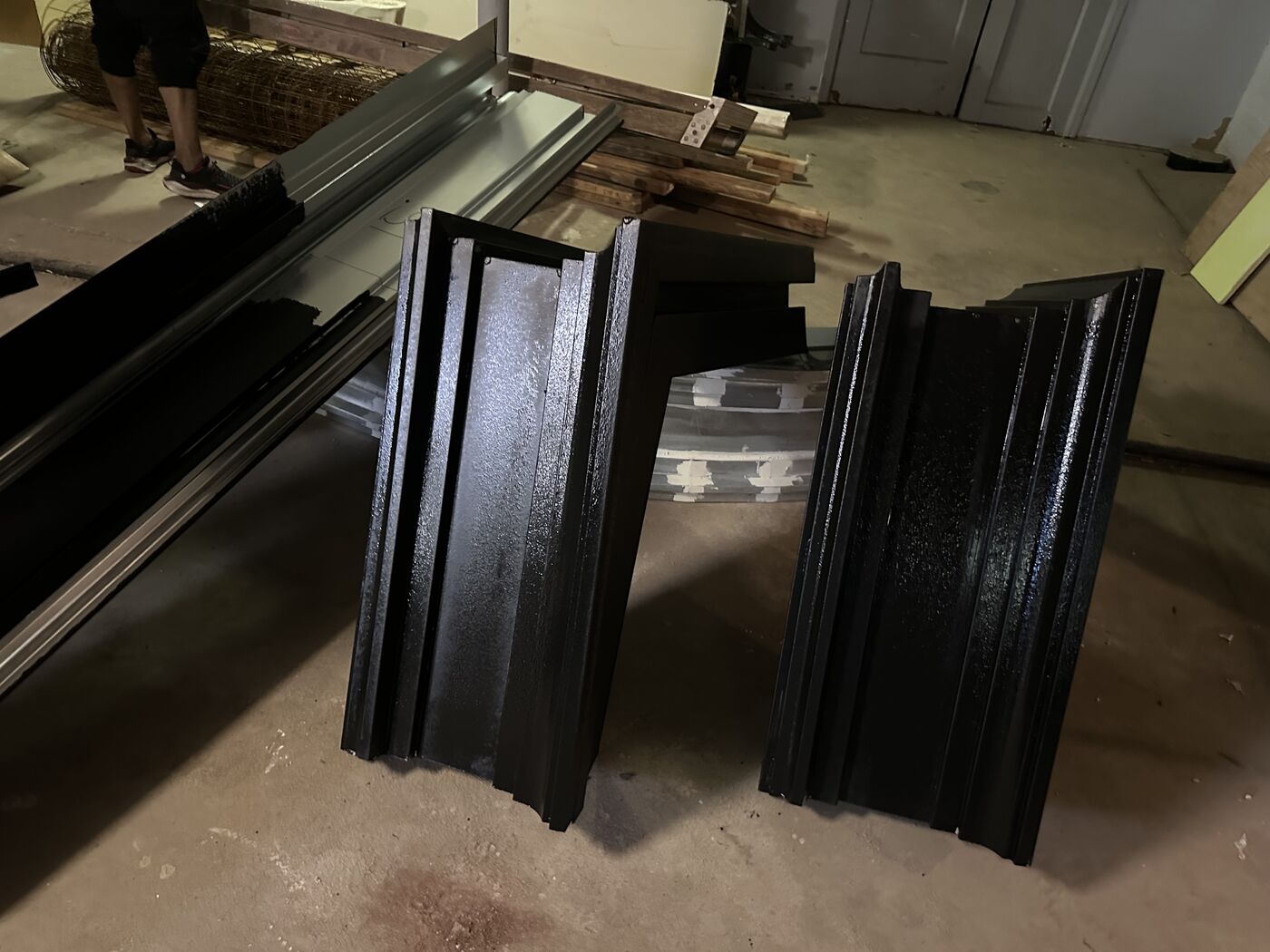
1055 Lexington Avenue
Cornice restoration & paint
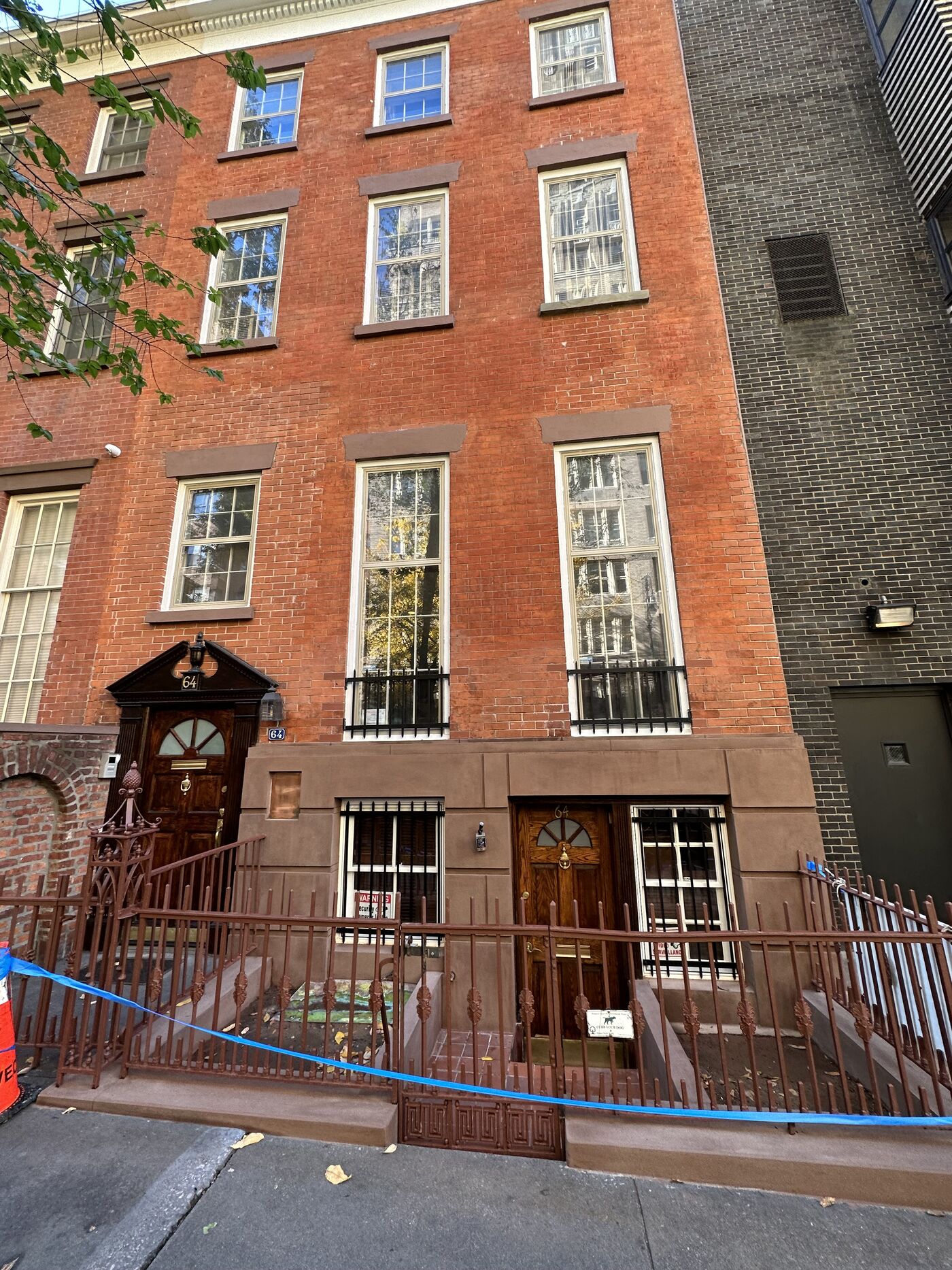
64 West 12th Street
Landmark cornice repair
248 Vernon Avenue
Brownstone, stoop & cornice
Frequently asked questions
How can I tell if my cornice needs work?
Stand across the street and look up. Warning signs include: rust streaks running down the facade below the cornice, visible sagging or unevenness, missing or shifted decorative pieces, peeling or bubbling paint, and any obvious gap between the cornice and the wall. If you see any of these, call. If you do not see any, but the cornice has not been worked on in 20+ years, it is worth a free walkaround.
Will I need scaffolding for cornice work?
Almost always, yes. NYC cornice work requires either pipe scaffolding or a sidewalk shed, and a DOB scaffold permit. We handle all permits and setup as part of the project. Scaffolding is 15–30% of the total cost on most cornice jobs — there is no way around it because cornices are by definition at the top of the building.
How long does cornice repair take?
A standalone cornice repair on a typical four-story Brooklyn brownstone runs 3–10 days on site, plus 1–3 days for setup and teardown. Larger or landmark scopes can run 2–4 weeks.
Do I need LPC approval?
If your building is in an LPC-designated historic district, yes. The cornice is one of the most architecturally significant parts of a historic facade, and any meaningful repair or color change typically requires LPC review. We coordinate the application as part of the project.
Can I just have it painted instead of properly repaired?
You can, and someone will do it for you cheaply, and it will look fine for 18 months. After that the rust and rot will come back through the paint and you will have spent money that bought you almost nothing. We do not do paint-only cornice "repairs." We will tell you that on the first call.