
What "landmark work" actually means
If your building is within an NYC Landmarks Preservation Commission (LPC) designated historic district — or is itself an individually designated landmark — almost any visible exterior work requires LPC review and approval. This includes facade restoration, cornice repair, stoop work, repointing with a different color or mortar type, repainting, sidewalk replacement with new materials, and obviously any window, door, or storefront changes.
The LPC review process is not a quick check. It typically takes 4–12 weeks for staff-level approvals and 3–6 months for items that go to the full Commission. The materials, finishes, and methods must conform to the district's designation report and historic preservation guidelines.
This sounds intimidating, and the wrong contractor will tell you it is. The right contractor — one who has done the work many times — knows how to put together an application that gets approved without back-and-forth, and how to execute the work to a standard that holds up to LPC site visits.
Why limestone is different
Limestone — particularly Indiana limestone, the most common variety on higher-end NYC buildings — behaves very differently from brownstone. It is denser, less layered, less prone to spalling — but more vulnerable to chemical attack, especially from acid rain and salts.
Common limestone failures we see in NYC:
- Surface erosion at carved details — letters, ornament, decorative elements lose definition over decades.
- Sugaring — the surface develops a sandy, granular texture as the calcite binders break down.
- Black crust formation in protected areas where pollution accumulates and reacts with the stone.
- Joint failure — like brownstone, but the failure mode is different and the cleaning approach is different.
Limestone restoration uses different patching compounds, different cleaning methods (often softer — no harsh acids), and often involves consolidation treatments that strengthen weakened stone before patching. The wrong cleaning method on limestone — particularly aggressive power washing or acidic cleaners — can destroy the surface in a single afternoon.
Our landmark process
Landmark and limestone projects follow a longer, more documented version of our standard process.
1. Pre-application assessment
We walk the building, document existing conditions with detailed photos, and identify the scope of work. For LPC-required projects, this assessment becomes the basis of the application.
2. Application coordination
We work with your architect, or coordinate directly if you do not have one yet, to prepare the LPC application. Materials are specified by manufacturer. Color matches are documented. We know what LPC reviewers look for and we provide it up front.
3. Test patches
Before full work begins, we install test patches in inconspicuous areas to confirm color match and finish. LPC sometimes wants to see these before approving the full scope.
4. Restoration
Work is performed with LPC-approved materials and methods. We document each stage with progress photos, which is helpful for any LPC site visits and creates a record for the building's file.
5. Sign-off and final inspection
Final walk-through with you, your architect, and (when applicable) LPC inspectors.
Historic districts we serve
We have completed projects in or have working knowledge of the following NYC historic districts:
Brooklyn
- Park Slope Historic District
- Brooklyn Heights Historic District
- Boerum Hill Historic District
- Cobble Hill Historic District
- Carroll Gardens Historic District
- Fort Greene Historic District
- Clinton Hill Historic District
- Bedford Historic District
- Crown Heights North Historic District
- DUMBO Historic District
Manhattan
- Greenwich Village Historic District
- Greenwich Village Historic District Extensions
- Upper East Side Historic District
- Carnegie Hill Historic District
- Hamilton Heights Historic District
- Mount Morris Park Historic District
- SoHo-Cast Iron Historic District
- NoHo Historic District
- Chelsea Historic District
What landmark restoration costs
Landmark work costs roughly 15–30% more than the equivalent non-landmark scope, because of LPC documentation, approved-material specifications, and longer timelines. Typical ranges:
Landmark cornice
$25K – $75K
Cornice repair on an LPC building, with appropriate documentation.
Landmark stoop & lower facade
$30K – $80K
Stoop restoration with LPC-approved finishes and color match.
Landmark facade restoration
$60K – $200K
Comprehensive facade work in a historic district.
Individually landmarked building
$80K – $300K+
Higher review threshold, premium materials, longer timelines.
Recent projects
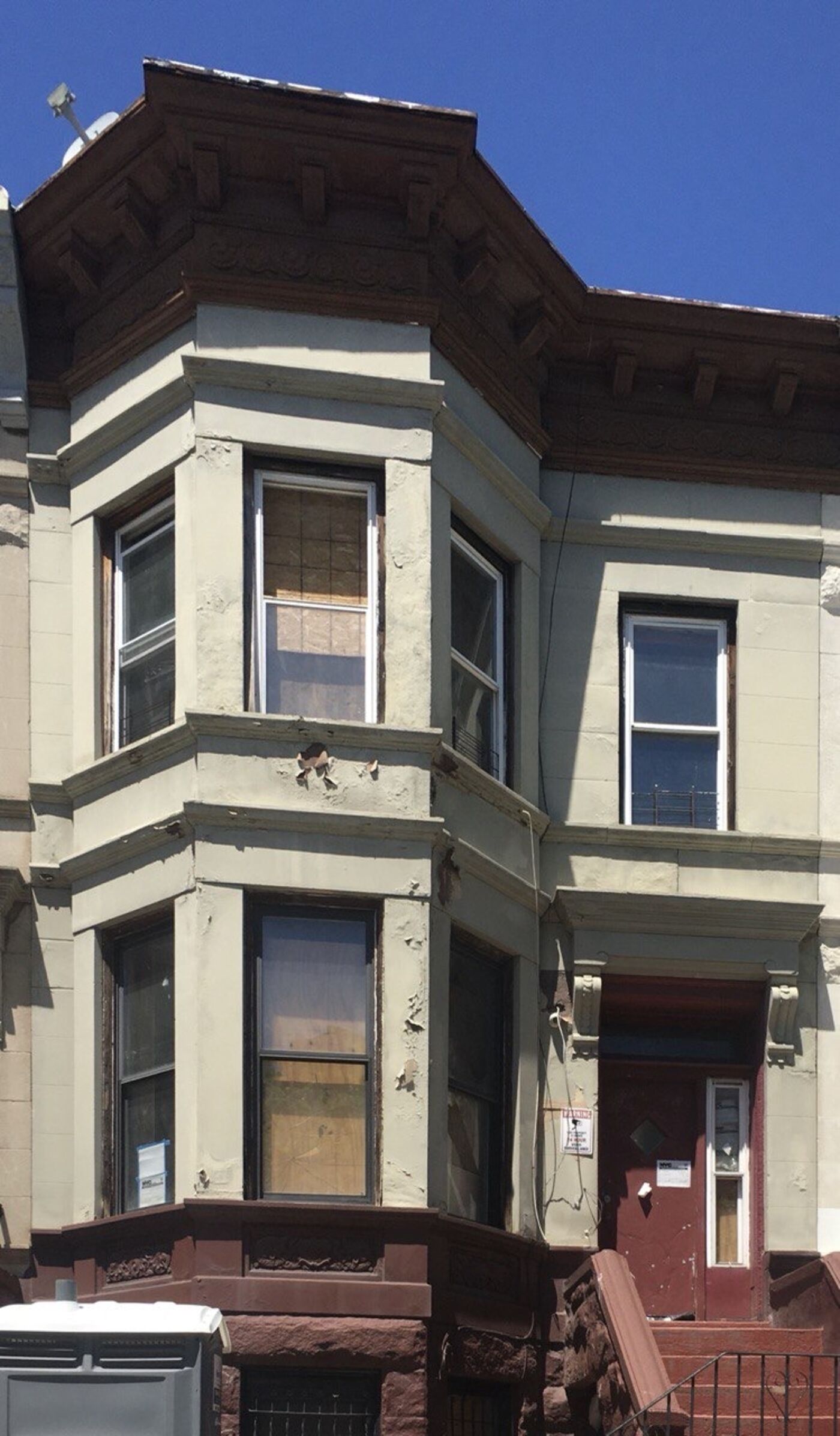
1437 Dean Street
Landmark limestone & painting
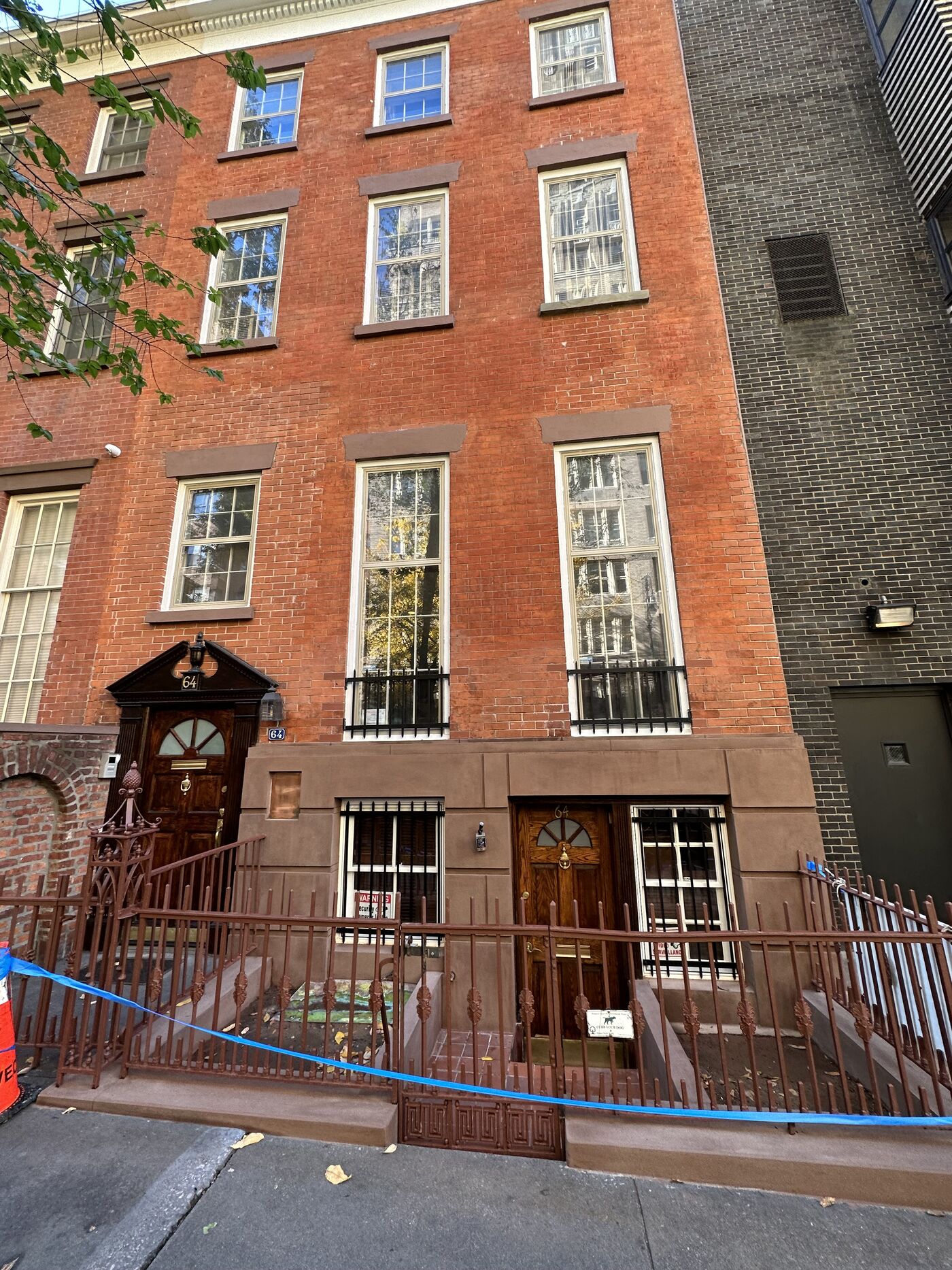
64 West 12th Street
Landmark cornice & brownstone
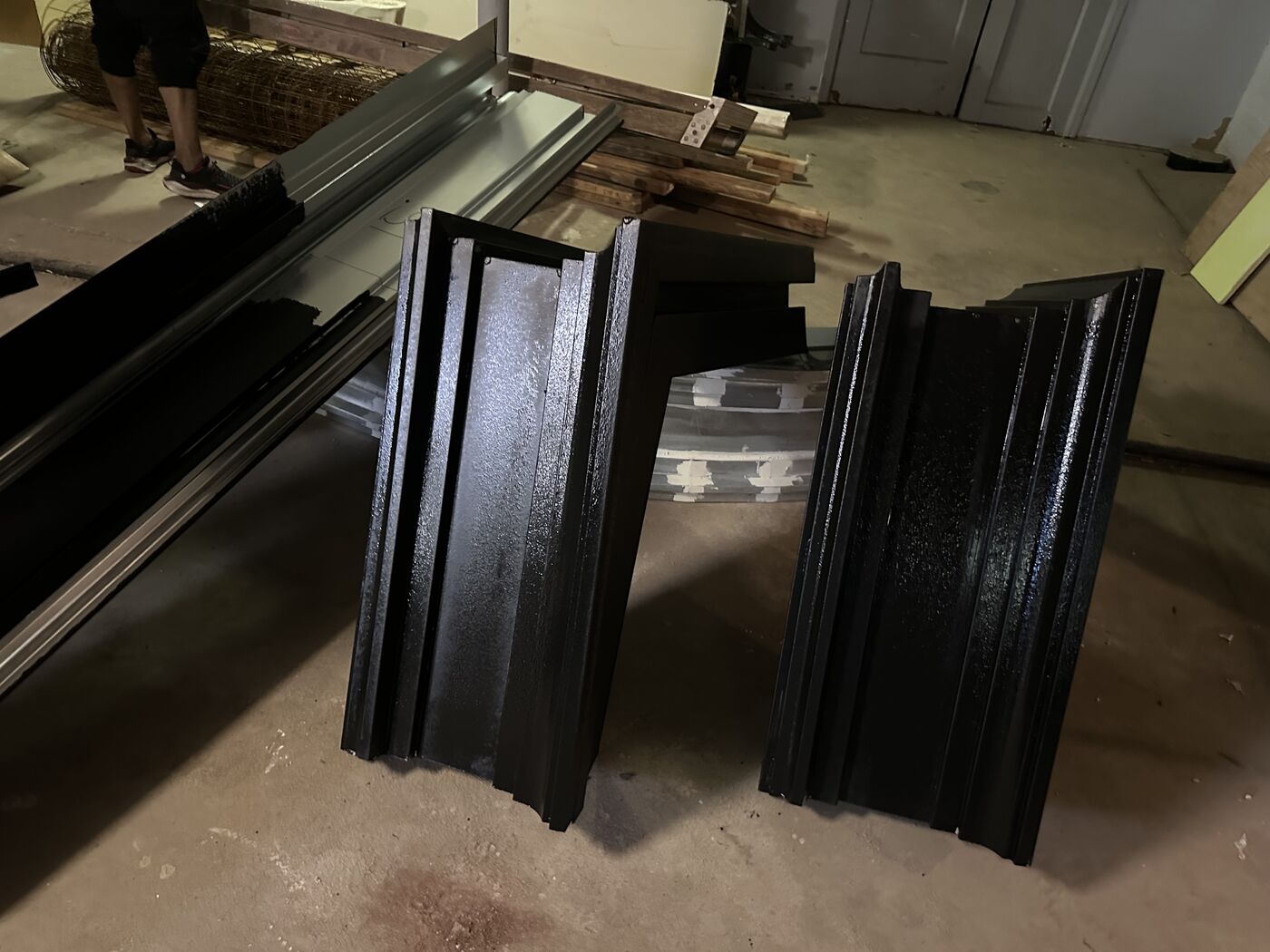
1055 Lexington Avenue
Cornice restoration
Frequently asked questions
How long does LPC approval take?
Staff-level approvals (most routine restoration work) typically take 4–8 weeks. Items that require full Landmarks Preservation Commission hearing — generally larger or more visibly altering projects — can take 3–6 months. We help you plan project timelines around this.
Do I need a separate architect for landmark projects?
For most facade restoration scopes — cornice, stoop, repointing, color-matched recoating — we can handle the LPC application directly without a separate architect. For larger or more complex work (window/door changes, new construction, major alterations) you will need a registered architect; we work with several we trust and can refer you.
Can I use any color paint on a landmark facade?
No. LPC has approved color palettes and historical-context guidance for each district. The good news is they are not actually restrictive — most of the historic colors are also the most attractive. We help you select colors that will pass review and look right.
What if I do landmark work without LPC approval?
Eventually LPC inspectors notice. The penalty can include fines, mandatory reversal of the work at owner expense, and a "violation" filing on the property record that can affect resale. It is dramatically cheaper to do it right the first time. We do not work without proper approvals.